Ismerj meg minket!
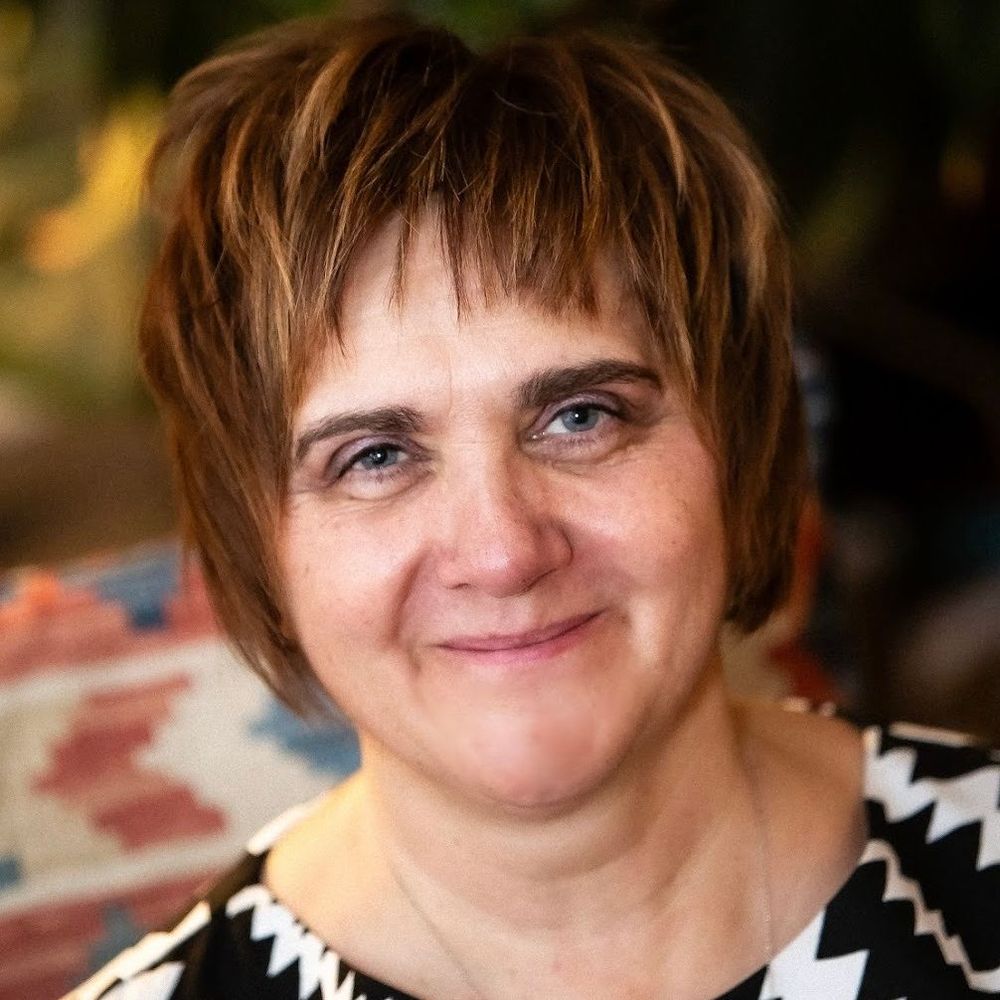
Thousands of volunteers work on the foundation’s plantings, most of whom Franciska knows well. Together with Iván András Bojár, they are the driving force and soul of the organization. Although she had a “regular” profession, she says she truly found herself in this civil activity. Her favorite tree is the beech, but what kind of tree she would be is revealed in the conversation.
You have been part of the founding team of the 10 Million Trees from the beginning. Why did you decide to join?
– Four and a half years ago, Facebook showed me Iván’s post, and I felt I had to apply. The post appeared on July 6, 2019, and the Facebook group was formed on the 9th.
I think it mattered that I became a member of the initial team because we knew each other as children. Our mothers worked as restorers in the same workshop, and although we weren’t friends, we always knew about each other. During socialism, the museum environment was a unique, intellectual, somewhat resistant world where the feeling of belonging to the same group was important. So there was a kind of trust in me, and obviously in Iván too, that this would be good.
With such a change, the question arises: there must have been some vacuum in your life, in you, that made you open to the message…
– For some time, I was troubled by the thought that the world was heading in the wrong direction, and I didn’t have the ability or capacity to change it.
I slept little, woke up anxious, which had personal reasons too, but the bad sleep disappeared instantly as I started getting involved with 10 Million Trees. This activity pulled me out of the helpless, oppressive state I was in.
I didn’t think the problems causing my anxiety would be solved quickly, but I wanted to do something because it distanced me from the troubles and gave me the opportunity to contribute to an important, common cause.
In the team, I found companions and was surprised by how many people came with similar thoughts, how many experienced the same as I did. And while previously there was the question of what I could do alone, in the togetherness there was the possibility of collective action, and that gave me strength. I often experience this feeling since then: a few days ago, thirty to forty of us planted 1,350 small saplings. It’s an uplifting feeling to be part of this. As a coordinator, I am essentially connected to every sapling planted, and we have already surpassed 300,000.
What is your role at the foundation, what are your daily tasks?
– My main task is coordinating the daily, operational work for the functioning of the national community, but I am also present at the plantings.
When an organization is built from scratch, everyone does what they can handle. Meanwhile, we also have to get to know each other, understand how the other operates, what they are good at, what they can take on.
At the beginning, I said I had a few hours a week for this, then it absorbed me, and now it’s my main occupation. Iván is the founder and leader of the organization, he gives interviews, he has the vision, he sees years ahead. As for the tasks to be accomplished until then, I handle them, of course discussing everything together.
I am good at organizing the tasks for the next day or those due in three months, and I understand how people operate. A very good symbiosis has developed between us. Iván has a huge fire, he charges ahead, showing us where to go, and I can support him to ensure we get there.
Have trees and nature been an important part of your life since childhood?
– So now I’m going to come out: I didn’t come from the green side, but rather from the side of wanting to take action. Everything I know about tree planting, I learned since I started working here.
I’m generally interested in human relationships. The fact that the direction of change in the world is negative didn’t manifest in me so much in relation to the environment or ecology, but rather in relation to people’s behavior.
I have a great circle of friends, but I’ve long felt that I’m moving with the same people in the same bubble. I longed to open up, to meet new faces, because I felt I was becoming narrow-minded. In the 10 Million Trees initiative, I’m more interested in people. Of course, I’ve gotten much closer to green thinking than before, but what keeps me in the system is the community and the connection to it.
I work with valuable, interesting people in a positive, non-accusatory environment. Unfortunately, at home, sniping and trolling are typical, not supportive behavior. The 10 Million Trees not only gives meaning to my life but is also good to be part of. As an interpreter-translator, I was never in a leadership role, so it’s exciting to experience that I can do this too, beyond the fact that what I do has an impact on my environment.
How big is this supportive environment you’re talking about?
– The 10 Million Trees is now multi-level: the central team consists of 15-20 people with whom I have more or less daily contact. There is a national coordination team of about 100 people, and thousands of volunteers. Our work is increasingly recognized and acknowledged.
We recently received a special award at the Superbrands Gala, which was a real surprise because we thought we were invited to introduce ourselves as a civil organization offering green solutions.
Does becoming more well-known mean new tasks and greater responsibility?
– Every new season presents us with new challenges. Companies are required to “go green,” to be sustainable. 95% of contributions come to us by people reaching out, and we always have to step up to meet the demand. This is incredibly exciting because we have to be innovative. We are becoming more visible, so greater challenges are coming.
Last year, for example, a bank approached us to plant trees in a hundred schools. This is essentially a hundred mini-projects, which is challenging even for a national horticultural company. Of course, we didn’t say no. The growth is exponential, the foundation is on the brink of a significant leap, a scale change has begun at 10 Million Trees.
Until now, we have planted largely in public spaces, but we want to increase the number, as the climate situation also calls for it. We had a reforestation campaign, looking for places for two million trees, and surprisingly many people applied. Now the preparation of these areas is underway, and we are looking for resources for this.
You mentioned earlier that instead of support or donation, people approach you with contributions. Why is this wording important?
– Although legally this is support, for us the word suggests a hierarchical relationship between the parties. But these matters need to be carried out together, we’re rowing in the same boat, so the relationship is also a partnership. We use the words contribution and cooperation for educational purposes, to express that we are doing this together, the relationship is equal rather than dependent.
Although the planting itself is a logistical feat, how do you track the fate of each planted area? Who maintains and waters these trees and forests? What responsibility can you take in this?
– In the words of Péter Geszti: we plant and nurture. It is typical, of course, that no one really calculates the cost of watering when it comes to tree planting. If we plant in schools or institutions, they take on the care, but in public spaces and reforestation, we have to solve this. We quickly learned that projects need to be offered as a package, meaning planting and maintenance together. And since we are a national organization, our operating costs must also be considered.
Do you have a favorite tree?
– The beech. It’s a wonderfully beautiful, excitingly shaped tree.
If you had to identify yourself with a tree or tree species, what would you be?
– The service tree.
What have you gained from the 10 Million Trees in terms of self-awareness and personal development? In what ways have you strengthened?
– A relatively large, previously unknown part of my personality has emerged. It turned out that I can cooperate well with many people, and I have developed a lot in conflict management as well.
In the past, I always tried to avoid conflicts, or if I couldn’t avoid them, I didn’t handle them well. The 10 Million Trees provides an opportunity for continuous improvement in this, as I maintain relationships with a variety of people and companies. This situation inspires me, and I have learned techniques that help me through difficult situations. This benefits the cause, the community, and myself. I have learned to make decisions freely and responsibly, which strengthens me because it seems to work. I have gained a stronger and more effective self from the work here and the community.
This is a pretty good closing remark, but before the holidays, I must ask: will you have a Christmas tree at home, Franciska?
– There is a very good answer to this in the knowledge base on our website, and I encourage everyone to read the experts’ opinion. In short, the essence is to separate the concept of forest and plantation. The latter is grown for cutting. The potted pine is not a good solution either. But I think this is not so much an ecological issue as a cultural one, and I am a bit more lenient in this regard.
Read the second part of the series: Dénes, the problem solver!
Source – Vulkán Literary Journal: https://vulkanfolyoirat.hu/nichs-andrea-hervai-franciska/